
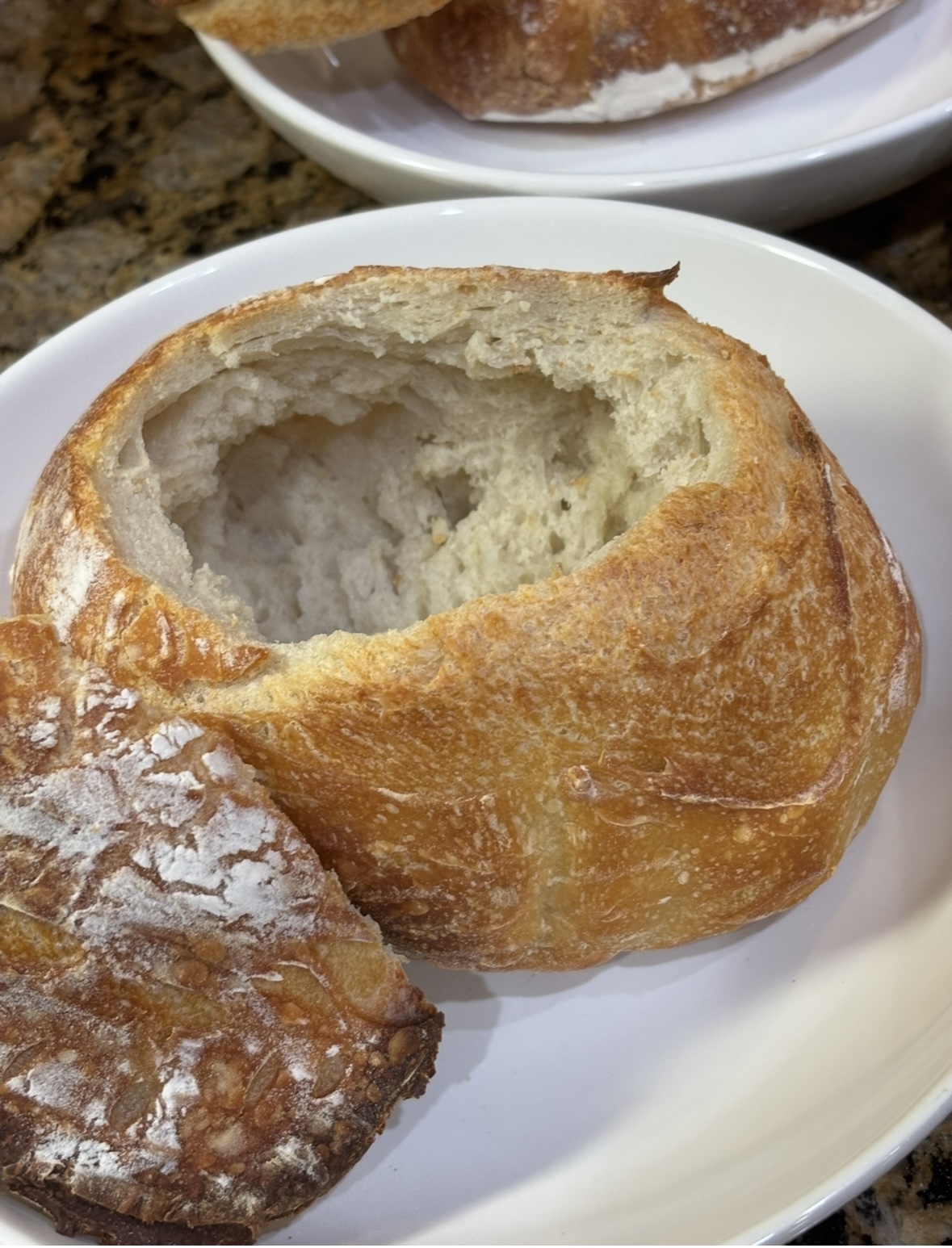
The Nutrition Benefits of Sourdough Bread
Sourdough bread stands out from conventional bread due to its fermentation process.
Key benefits include:
- Natural fermentation may improve mineral absorption
- Lower glycemic response compared to many refined breads
- Contains beneficial organic acids that support digestion
- Often easier to tolerate for some people than standard bread
While it’s still a carbohydrate source, sourdough offers nutritional advantages that make it a more balanced choice when enjoyed mindfully.
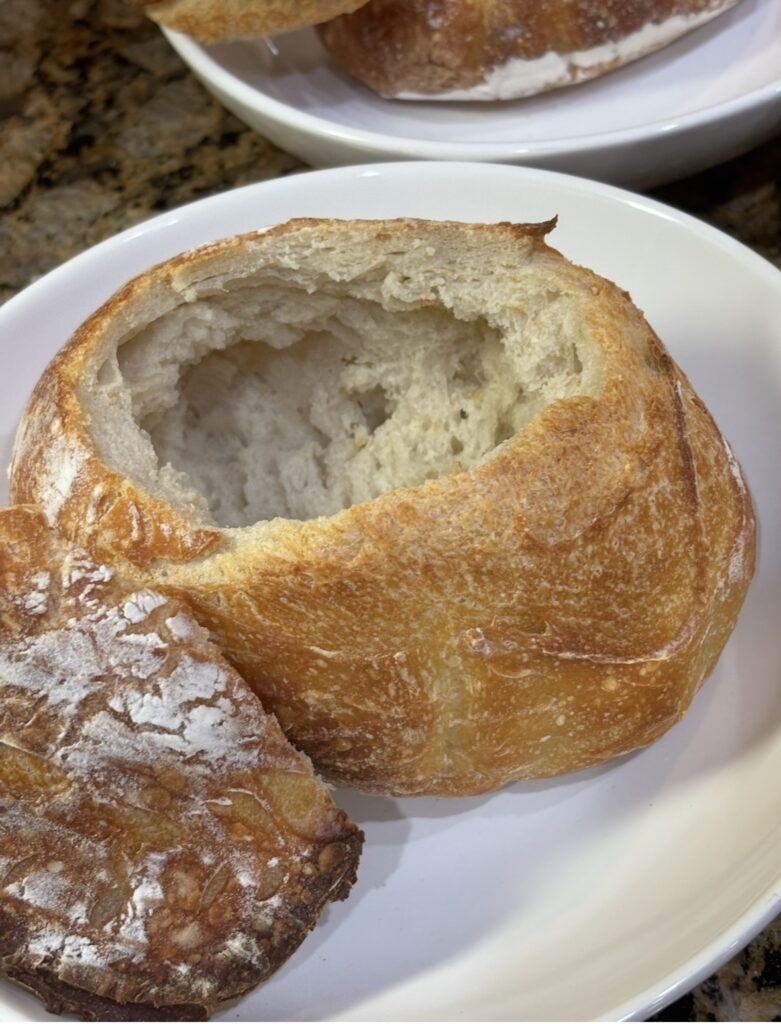
Is a Sourdough Bread Bowl Healthy?
A sourdough bread bowl can absolutely fit into a balanced diet. I am a true believer that everything can fit into a diet if paired well.
Health depends on:
- Portion size
- The soup served inside
- Overall meal balance
Pairing sourdough with a soup rich in vegetables, protein, and fiber helps create a satisfying and nourishing meal rather than a carb-heavy one.
Why Sourdough Pairs Well With Hearty Soups
The tangy flavor and sturdy texture of sourdough make it ideal for soups that are thick and filling.
Sourdough bread bowls work especially well with:
- Creamy vegetable soups
- Bean-based or lentil soups
- Chowders and stews
The bread absorbs flavor without becoming soggy too quickly, enhancing both texture and enjoyment.
Portion Awareness Without Guilt
Bread bowls are often labeled as “unhealthy,” but that framing misses the bigger picture.
Instead of avoiding them, consider:
- Eating part of the bread and saving the rest
- Sharing a bread bowl
- Listening to hunger and fullness cues
Food satisfaction matters, and enjoyment plays a role in sustainable nutrition habits.
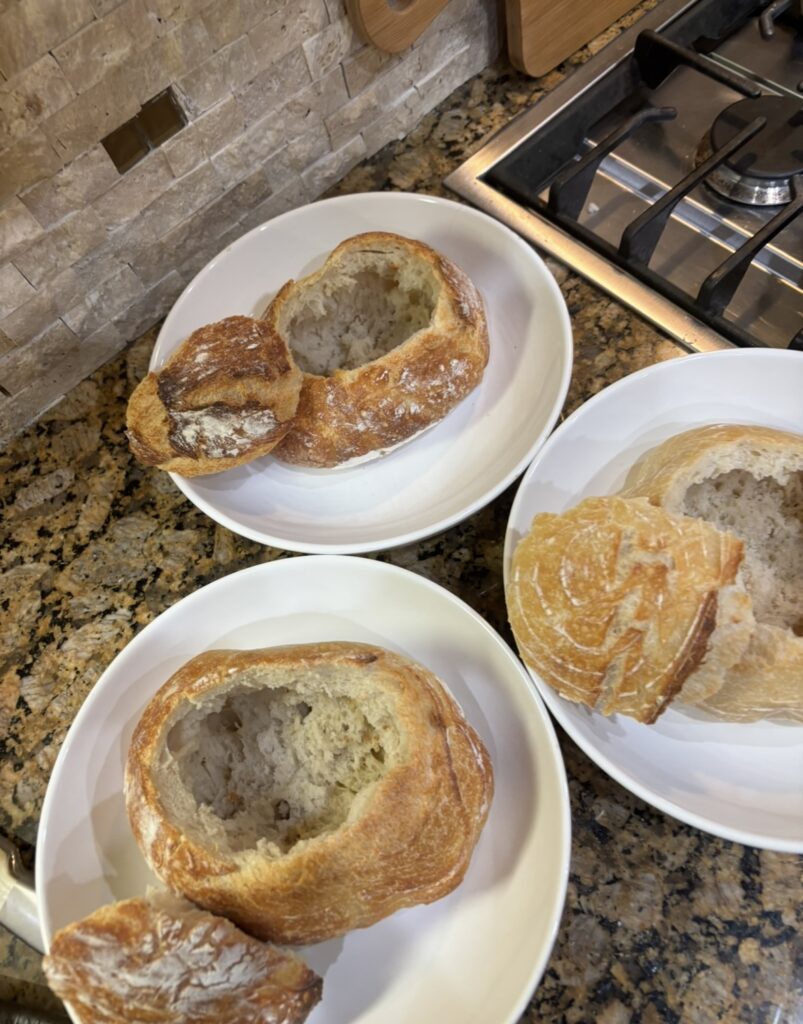
When a Sourdough Bread Bowl Makes Sense
A sourdough bread bowl is a great option for:
- Cold weather meals
- Higher-energy days
- Post-activity or long workdays
- Meals focused on comfort and nourishment
It’s not about eating this way every day, it’s about having foods that support both physical and emotional well-being.
As a dietetic intern, I’m learning that sustainable nutrition includes foods that feel comforting and enjoyable.
A sourdough bread bowl isn’t just a “fun” way to eat soup, it’s an example of how traditional foods can fit into modern, balanced eating patterns when paired thoughtfully.
The Fear Around Grains and Carbohydrates
Grains and carbohydrates are often misunderstood. Over the years, diet culture has framed carbs as something to “avoid,” “earn,” or only eat in small amounts, especially foods like bread.
This fear can lead people to unnecessarily restrict foods that are meant to provide energy, satisfaction, and nourishment. Bread isn’t the problem; context and balance matter far more than cutting out an entire food group.
Why Carbohydrates Are Not the Enemy
Carbohydrates are the body’s primary source of energy. Whole and minimally processed carbs, like sourdough bread, also provide fiber, B vitamins, and minerals that support digestion, brain function, and overall health.
Fermented breads like sourdough may be easier to digest for some people and can lead to better blood sugar balance compared to more refined breads. Avoiding carbs altogether can actually increase cravings, low energy, and feelings of restriction around food.
Reframing Bread as Part of a Balanced Meal
Instead of viewing bread as something to fear, it can be helpful to see it as one component of a meal.
When paired with:
- Protein
- Vegetables
- Healthy fats
carbohydrates like sourdough bread contribute to satiety and sustained energy. A bread bowl filled with a vegetable- and protein-rich soup is a perfect example of how carbs can support a balanced plate.
Moving Away From Restriction
Fear around grains often comes from external food rules rather than individual needs. Learning to include carbs in a flexible, intentional way helps create a healthier relationship with food.
PrintSourdough Bread Bowl

Ingredients
-
944 g water
-
454 g active sourdough starter
-
36 g salt
-
1,320 g bread flour or unbleached all-purpose flour
Instructions
-
Feed your starter 5–12 hours before prepping the dough, until bubbly and doubled in size.
-
Once the starter has doubled, combine the starter, flour, water, and salt in a large mixing bowl. I like to use a bread whisk, but a fork or your hands work just as well.
-
Cover the bowl with a damp tea towel and allow the dough to rest for 30 minutes.
-
Perform your first round of stretch and folds: grab one side of the dough, stretch it up about 6 inches, and fold it over toward the opposite side. Rotate the bowl a quarter turn and repeat 3–5 times.
-
Complete a total of three rounds of stretch and folds, each 30 minutes apart, covering the bowl between rounds. By the final round, the dough should feel smoother and more elastic.
-
Cover the bowl with a damp tea towel and allow the dough to bulk ferment until doubled, about 4 hours at 70–75°F. If your home is cooler, this may take longer.
-
Once doubled, transfer the dough to the refrigerator to ferment overnight.
-
The next morning, gently turn the dough out onto a lightly floured surface. Carefully stretch it into a large rectangle, taking care not to deflate the air bubbles.
-
Lightly dust the top with flour and divide the dough into 4 equal pieces using a bench scraper.
-
Using the bench scraper, transfer the dough pieces onto parchment paper. Cover with a tea towel and allow them to rest at room temperature for 1 hour.
-
About 30 minutes before baking, preheat a pizza stone on the top rack of your oven to 475°F.
-
Once preheated, place a rimmed baking sheet or Dutch oven filled with water on the bottom rack. This creates steam and helps develop a golden, crisp crust.
-
Carefully transfer the shaped dough onto the pizza stone (I usually bake 2–3 at a time, depending on size).
-
Bake for 25–30 minutes, until the bread bowls are deep golden brown.
-
Remove from the oven and allow to cool completely before slicing out the centers for soup.